

Issues arising in application of instructional principles, strategies, and processes in international settings. Impact of educational technology reforms around the world; issues and challenges in designing multicultural learning; social aspects of instructional design, development, evaluation.
As soon as I learned that this course was part of the M.S. in IDD&E, I knew I wanted to review Russia even though it would be a challenge due to current events. I expect to find that some customs and practices from the former Soviet Union will still be common in modern Russian classrooms, especially since the USSR system is the one their current leader was educated in. However, Russia is no stranger to current technology, and so we might expect to observe such technology used in classrooms.
In retrospect, I should have chosen a more stable nation to review. As of the end of the summer ’23 term, I wake up every day wondering what crisis, attack, defense, etc. happened overnight in Russia or Ukraine that has a direct or indirect impact on the EdTech situation. More than the COVID-19 pandemic, the aggression toward Ukraine has had a monumental negative impact on what information residents of Russia consume, and how they can consume it. Many social media, including Facebook, Twitter, YouTube, and TikTok, have been banned. The only Internet service provider allowed in Russia is the homegrown Yandex.ru. Vimeo, an alternative to YouTube, suspended new business with Russia almost immediately after the invasion. Some of the world’s biggest tech companies, including Microsoft, Oracle, SAP, Apple, and Cisco, have done the same. The result is 147 million good people currently living in digital isolation.
In a demonstration of just how tech-savvy and hungry for outside news Russian citizens are, some creative folks were using VPNs to circumvent the blockades and access YouTube and other sites. The government’s response was to ban VPNs. Independent media have been all but obliterated; almost all news that reaches Russians is government-sponsored and approved. It is difficult for me to avoid injecting my opinions into the conversation on why this is happening, but I’ll just say I perceive this backslide to the Soviet era of lack of free information as having a long-term negative effect on Russia’s technology and education landscape. I hope I’m wrong.
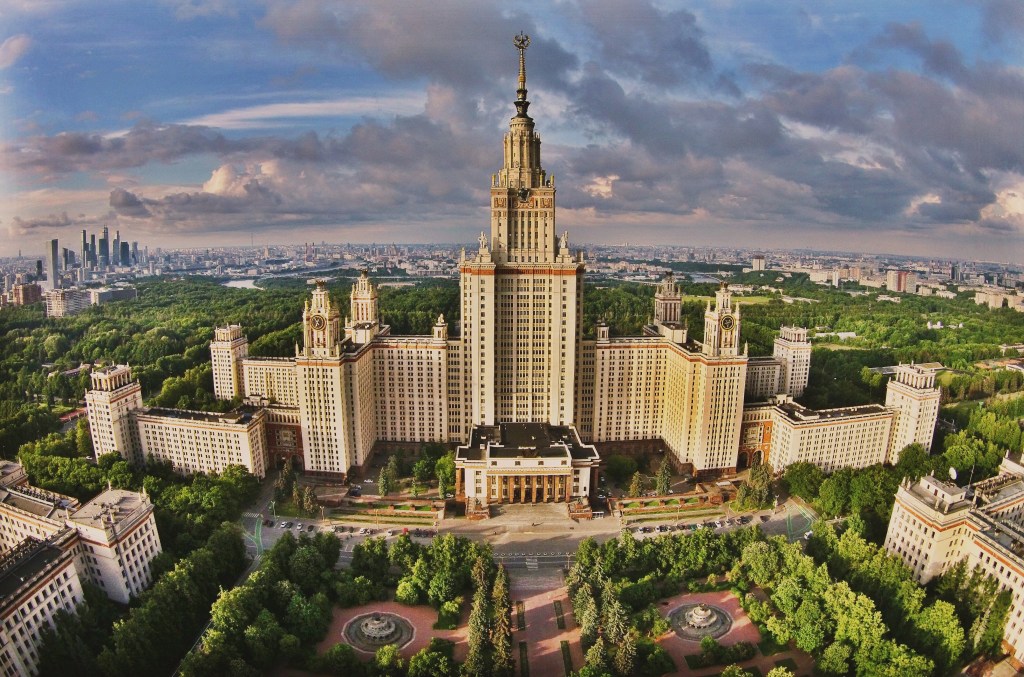
Photo of Russian National Library (above) author’s own. Photo of Lomonosov Moscow State University (below) by I. S. Kopytov – Own work, CC BY-SA 4.0, https://commons.wikimedia.org/w/index.php?curid=43020846
Final Grade: A
 Beth's Journey Through the Instructional Design Universe